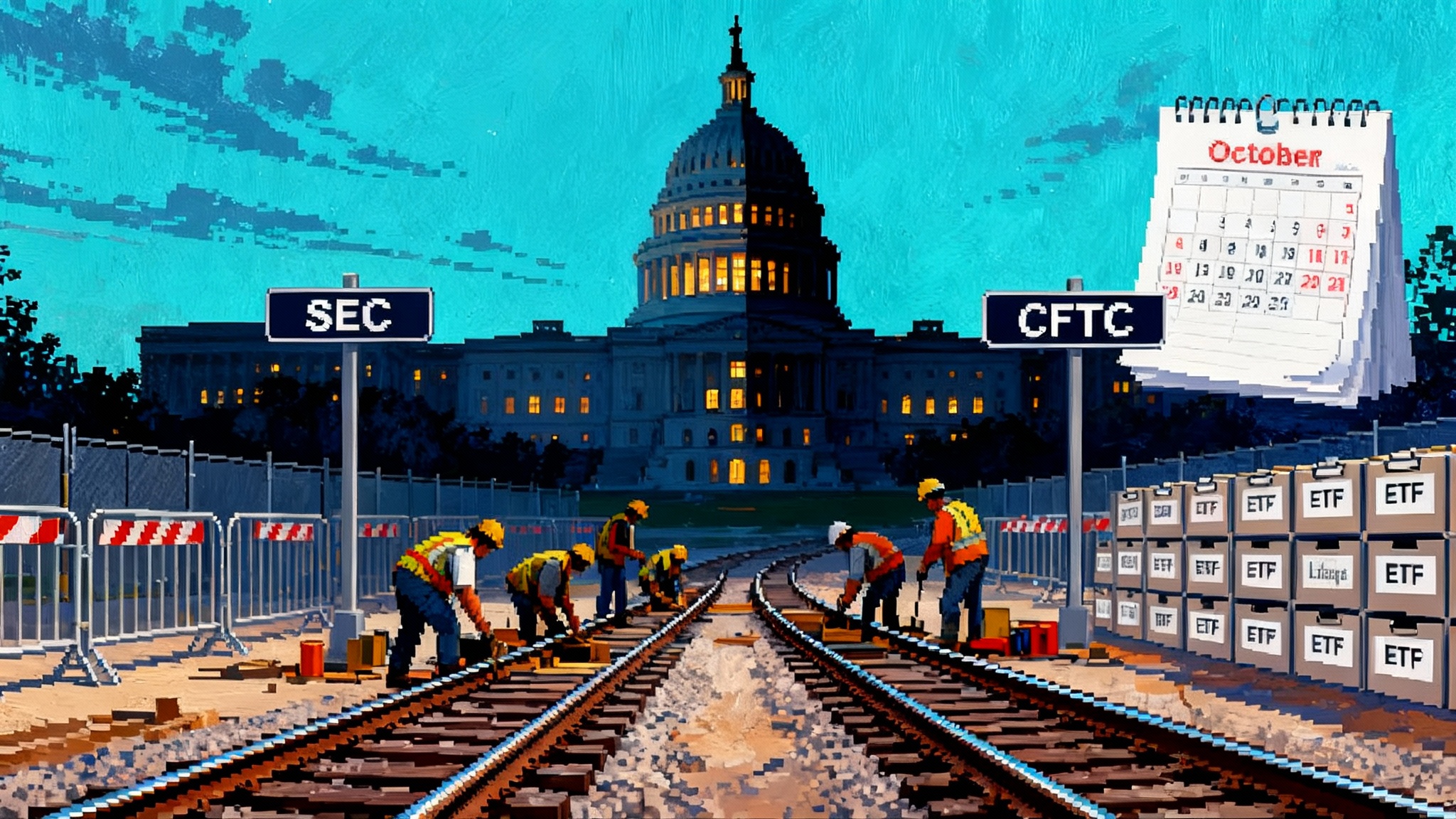
Training Wheels Off: BoLD and Base Unlock Stage 2 Exits
Arbitrum has activated BoLD and Base has switched on permissionless fault proofs, bounding withdrawal times and removing allowlists. It is the clearest step yet toward consumer‑grade onchain experiences over the next year.

The moment everyone was waiting for
Two switches flipped and the ground shifted. On February 12, 2025, Arbitrum activated BoLD on Arbitrum One and Nova, opening validation to anyone and bounding how long withdrawals can be delayed. You can see the dates in the project documentation under BoLD for Arbitrum chains.
Base crossed a similar milestone earlier. On October 30, 2024, it turned on permissionless fault proofs on mainnet, allowing anyone to propose and challenge state so users can exit without relying on a central operator. See Base’s announcement, Base fault proofs go live.
If 2023 and 2024 were the rehearsal for rollup decentralization, 2025 is opening night. For the first time at scale, users have a withdrawal path that does not depend on a small committee doing the right thing on the right day.
What Stage 2 actually means
In the shared language many teams now use, Stage 2 is the no training wheels end state for a rollup. The rules are strict: fraud proof systems must be permissionless, users must be able to exit without coordination from the operator, and any security council is constrained to narrow emergency powers. The goal is simple to say and hard to build: code, not discretionary signers, decides whether the chain’s state is valid.
Think of an airport where only a few staff can declare which flights really took off. That is a Stage 0 world. Stage 1 adds oversight, but passengers still depend on a few staffers to update the board. Stage 2 publishes flight logs directly from the plane’s sensors and lets any licensed auditor check them. The board updates itself.
What BoLD changes for Arbitrum users
BoLD is Arbitrum’s new dispute protocol. It keeps the optimistic rollup model, where claims about layer two state are posted to Ethereum and can be challenged during a window, but it fixes two long‑standing problems.
- It removes the allowlist. Anyone can validate and challenge claims by bonding capital and running the protocol.
- It sets a firm upper bound on dispute time so a malicious actor cannot keep delaying withdrawals by opening new challenges in a chain. Disputes resolve within a fixed window roughly equivalent to two challenge periods plus a short grace interval. With a default challenge period around 6.4 days, the worst case is now bounded rather than unbounded.
For most users, the everyday result will look subtle but decisive. The nominal wait for a native withdrawal still aligns with the challenge window, but the tail risk that a bad actor can stretch that window again and again is cut off. Wallets and bridges can reflect that certainty with clearer timers, and market makers can pre‑fund exits with tighter risk assumptions, translating into cheaper, faster liquidity even when markets are stressed.
What Base’s fault proofs unlock
Base’s move flipped the other critical switch for OP Stack chains: permissionless proposals and permissionless challenges. Anyone can submit an output root and anyone can contest it by running an open‑source challenger. That makes it possible to withdraw from Base to Ethereum without relying on a centralized actor to push the button. The network currently uses a 3.5‑day challenge window and the team has committed to continuously running at least one challenger while encouraging others to participate.
By April 2025, Base also decentralized control of upgrades via a security council and publicly stated that it had reached Stage 1 under the widely used framework. That sequencing matters because the hard part, permissionless fault proofs, is already in production, putting Base on a clear path to Stage 2 and offering a template for other OP Stack chains.
What training wheels off means for you
- You can exit without asking permission. Users no longer rely on a single bridge operator, multisig, or allowlisted validator to get funds back to Ethereum. Your withdrawal is a protocol right, not a favor.
- Liquidity providers can compress pricing. With bounded worst‑case delays and permissionless verification, professional market makers can underwrite fast exits with less tail risk and lower capital buffers, especially in volatile markets.
- More exchanges can support direct L2 flows. When exits are permissionless and proofs are live, centralized venues can rely more on protocol guarantees and less on off‑chain coordination with a single operator.
- Fewer scary buttons. Stage 2 narrows emergency powers and defaults to letting the protocol decide, which simplifies threat modeling and reduces single‑team responsibility for rescues.
Concrete playbooks for builders and teams
- Wallets and front ends: show real clocks. Replace vague withdrawal warnings with explicit windows tied to current parameters and dispute rules on each chain.
- Bridges: renegotiate liquidity rails. With bounded worst‑case windows and permissionless proofs, revisit inventory per chain and how you price fast exits.
- Exchanges: modernize deposit policies. Treat native exits and interop messages from Stage 2 rollups as first‑class, and align crediting rules to finality and proof windows rather than to an off‑chain signal from a sequencer.
- Protocols: plan for proof diversity. Multiple implementations reduce correlated risk as ecosystems mature. See how proof markets hit mainnet to understand why redundancy matters for verification.
The road ahead: interop and shared sequencing
Interoperability upgrades in the OP Stack aim to let a set of rollups pass messages natively, turning separate chains into a network. Deposits on one OP Stack chain could be withdrawn on another, and tokens could move without ad hoc bridges. This will roll out in phases governed by onchain decisions, and it pairs with improvements in data availability such as PeerDAS and the coming blob market.
Shared sequencing will shape user experience further. Today most chains sequence locally, then anchor to Ethereum. A shared sequencer network would let multiple rollups share ordering, coordinate fairness rules, and offer near‑instant pre‑confirmations while preserving sovereignty. For background on fairness debates and ePBS trade‑offs, see ePBS and fair ordering debate.
Why this unlocks consumer‑grade onchain UX in the next 12 months
Consumer software hates asterisks. Before these upgrades, onchain experiences often came with them. Withdrawals were fast, except when they were not. Bridges were safe, unless a multisig lost keys. Sequencers were impartial, unless they had to race a market. Stage 2 rollups turn those asterisks into rules that users can trust and developers can build on.
Here is what that can look like by this time next year:
- One‑tap top‑ups across OP Stack chains, settled by interop, with the ability to exit to Ethereum from whichever chain you are on.
- Withdrawals that always complete within a known window, even when markets are chaotic. BoLD removes the infinite delay risk on Arbitrum; Base reduces reliance on any central party for proof submission.
- Feeds and payments that feel realtime. With shared sequencing and pre‑confirmations, social apps and point‑of‑sale flows can give sub‑second feedback without sacrificing auditability.
- Safer listings and fewer bespoke integrations. As exchanges and custodians update risk models for permissionless exits, more chains can offer direct deposit and withdrawal support without custom bridging code.
None of this removes the need for careful engineering or clear communication about risks. Fraud proofs can be permissionless and still be wrong if the software is flawed, and interop adds new failure modes that teams must test obsessively. But the incentives now line up in a way they did not before. A single honest challenger is enough to secure an exit. A time limit is enough to guarantee a valid state. A shared registry is enough to make messages portable across chains. Those are the mechanical foundations of a consumer internet.
The bottom line
Stage 2 is no longer a slide in a deck. It is live code on networks that matter. Arbitrum’s BoLD and Base’s fault proofs change the default from trust us to trust the protocol and cut off the ugly tails that used to make risk managers flinch. Over the next year, interop and shared sequencing will carry that same philosophy into how chains talk to each other and how they confirm transactions in realtime.
If you build, adjust your assumptions to the new baseline. If you list assets, update your deposit and withdrawal policies to match permissionless exits. If you are a user, expect your wallet to start feeling more like an app store and less like an airport transfer desk. The training wheels are off, and the road ahead finally looks paved.