45Z Launch Year: New Rules That Reshape U.S. Clean Fuels
Treasury’s 2025 guidance and DOE’s 45ZCF-GREET model now define how U.S. producers earn the Section 45Z Clean Fuel Production Credit. See who can monetize through 2027, how carbon intensity scoring works, how to stack LCFS and RINs for bankable offtakes, and how to build fast.

The starting gun: 45Z is live and the rulebook is out
On January 10, 2025, the U.S. Department of the Treasury released guidance for the Inflation Reduction Act’s Section 45Z Clean Fuel Production Credit. Five days later, the Department of Energy published a dedicated lifecycle model called 45ZCF-GREET. These two moves gave project developers a single playbook for how to earn and verify the credit through 2027. The signal was unmistakable: 45Z is not a concept anymore, it is an operating market. Treasury’s notice answers who and what qualifies, and it anchors emissions accounting to a public methodology. DOE’s model gives producers the dials and gauges they must use. If you make transportation fuel in the United States and can document your carbon intensity, you now have a path to revenue. Read how Treasury framed scope and timing in Treasury launches 45Z guidance.
What 45Z pays, in real numbers
Section 45Z pays a per-gallon credit multiplied by how clean your fuel is. The statute sets two applicable amounts before inflation adjustment:
- 1.00 dollar per gallon for non-aviation transportation fuels if prevailing wage and apprenticeship rules are met; 20 cents per gallon if they are not
- 1.75 dollars per gallon for sustainable aviation fuel if those labor rules are met; 35 cents per gallon if they are not
Your payout equals that applicable amount times the emissions factor. The emissions factor is a simple ratio that compares your lifecycle emissions to a fixed baseline of 50 kilograms of carbon dioxide equivalent per million British thermal units. The formula is: emissions factor equals (50 minus your fuel’s emissions rate) divided by 50. The lower your lifecycle emissions, the larger the share of the applicable amount you earn.
Two quick examples to make this concrete:
- A renewable diesel with a modeled lifecycle emissions rate of 25 kilograms per million British thermal units has an emissions factor of 0.5. If labor rules are met, the credit would be roughly 0.50 dollars per gallon. If not, it would be about 0.10 dollars per gallon.
- A sustainable aviation fuel with an emissions rate of 20 has an emissions factor of 0.6. If labor rules are met, the credit would be roughly 1.05 dollars per gallon. If not, it would be about 0.21 dollars per gallon.
45Z is earned by the producer at a qualified U.S. facility when the fuel is produced and sold to an unrelated party. Producers must register with the Internal Revenue Service as clean fuel producers before they claim the credit. The credit is available for fuel produced from January 1, 2025 through December 31, 2027, and it is indexed for inflation. It can be sold under the federal transferability rules, which allows developers to turn the credit into cash in the year it is earned.
The new ground truth: 45ZCF-GREET
DOE’s 45ZCF-GREET is the official model for calculating lifecycle greenhouse gas emissions under 45Z. It contains feedstock-specific pathways for both sustainable aviation fuel and non-aviation fuels, and it is designed to be transparent and operable by taxpayers. DOE’s landing page explains what is included and how to use it in the DOE’s 45ZCF-GREET model.
Three practical takeaways from the model:
- Facility specificity wins. The model expects facility-by-facility inputs, not generic industry averages. Metered energy, actual transport distances, feedstock origins, and real coproduct handling determine your emissions rate.
- Electricity matters twice. Electricity is both a direct input and a lever for process heat, hydrogen production, or carbon capture. Treasury and DOE signal alignment with 45V-style accounting, which ties to how hydrogen projects still pencil. Expect rules about time and location matching to influence what counts as low carbon power in your calculation.
- Climate-smart farming is a swing factor. Treasury indicated that additional reductions can be recognized for documented climate-smart practices for domestic corn, soy, and sorghum used as primary feedstocks. For many ethanol-to-jet and E85 pathways, agronomy will be the deciding edge.
Winners who can monetize now through 2027
The market will reward projects that can prove low carbon intensity quickly and sell real gallons into qualifying uses. Four groups stand out.
1) Sustainable aviation fuel with real deliveries
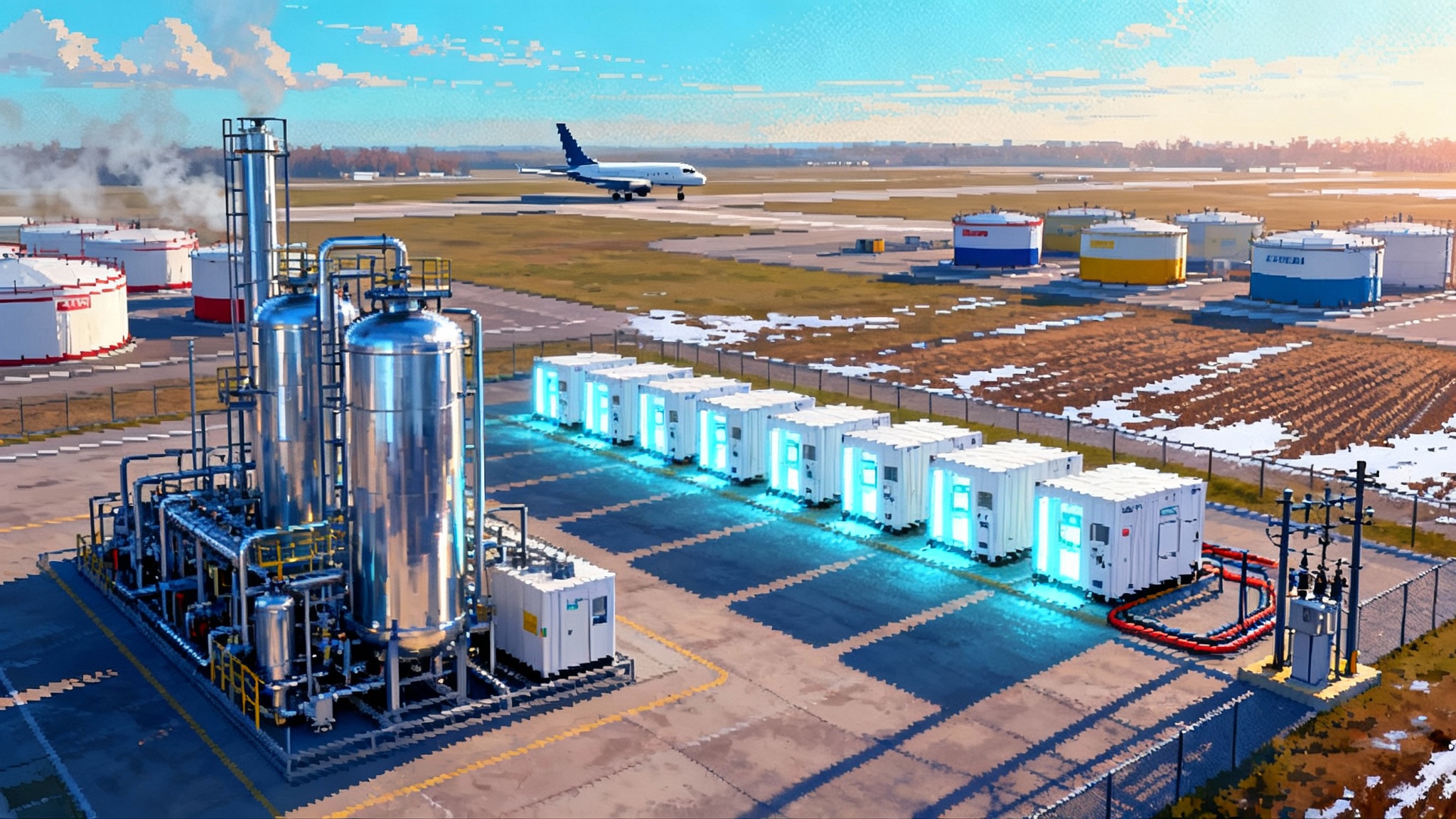
- What qualifies: HEFA-based jet fuel made from waste oils and fats, alcohol-to-jet from ethanol, and power-to-liquids with verifiably clean hydrogen and carbon sources. Fuels must meet aviation specifications and be sold into the jet market.
- Why now: Airlines, cargo operators, and fixed base operators are building multi-year offtake programs. If you can make ASTM-spec fuel in 2025 or 2026, 45Z gives a material sweetener on top of state programs and corporate decarbonization budgets.
- Who is positioned: U.S.-based producers with existing hydrotreaters configured for jet cuts, ethanol players piloting alcohol-to-jet, and early e-jet developers located next to low carbon power and validated carbon sources. Think World Energy Paramount in California for HEFA, LanzaJet in Georgia for alcohol-to-jet, and power-to-liquids developers like Infinium or Twelve planning U.S. sites.
2) Corn ethanol plants with climate-smart farming and carbon-smart operations
- What qualifies: Ethanol sold into road markets, or upgraded to alcohol-to-jet, with documented reductions from climate-smart farming, efficient process heat, clean electricity, and carbon capture of fermentation streams where allowed by your credit strategy.
- Why now: Ethanol producers already collect granular data. Layering farmer programs for no-till, cover crops, and precision nitrogen management can drop the carbon intensity meaningfully. That moves the emissions factor and opens higher 45Z payouts.
- Who is positioned: Scaled producers with farmer networks and data systems. Names like POET, Green Plains, and ADM can combine agronomy programs with process improvements. Some will route ethanol into ATJ to access the higher applicable amount for aviation.
3) Renewable natural gas to liquids
- What qualifies: Renewable natural gas from landfills, wastewater, or dairy projects converted to drop-in hydrocarbons or to methanol followed by jet or gasoline-range products. The key is to model the lifecycle rigorously and manage transport and cleanup losses.
- Why now: Renewable natural gas projects already document methane capture and have verification experience under the Renewable Fuel Standard. Converting renewable natural gas to liquid fuels can qualify for 45Z while also participating in Renewable Identification Number markets and state programs.
- Who is positioned: Developers with existing renewable natural gas portfolios, Fischer Tropsch or methanol-to-jet technology partners, and customers willing to contract around both molecule and credit value.
4) E-fuels built on clean power and high quality carbon
- What qualifies: Power-to-liquids using clean electricity plus green hydrogen and either direct air capture carbon dioxide or biogenic carbon dioxide. The 45Z model rewards clean inputs and penalizes fossil-based ones, so engineering discipline matters.
- Why now: 45Z creates a bridge to market for the first large U.S. e-fuel plants. Producers can target aviation or road fuels and sell the credit via transferability to monetize quickly. If you can site next to firm low carbon power and a validated carbon source, the numbers can pencil.
- Who is positioned: Developers like HIF Global and Twelve that have U.S. sites and relationships with utilities or behind-the-meter renewable power, plus industrial emitters that can supply biogenic carbon dioxide streams.
CI-score engineering: how to move the dial and prove it
Think of your 45Z carbon intensity as a budget. Every input either eats that budget or adds a credit. Your job is to turn knobs that are under your control while documenting every assumption.
- Feedstock choices and farming practices. For crop-based fuels, climate-smart practices for domestic corn, soy, and sorghum are a priority. No-till, reduced tillage, cover crops, stabilized nitrogen, and lower diesel hours per acre all count when properly documented. Contracts with growers must specify practices, acres, and data rights. Aggregators should maintain auditable chains of custody from farm to plant.
- Electricity and steam. Replace grid-average power with contracted low carbon electricity and prove time and location matching if required. Electrify process heat where feasible. For remaining thermal loads, evaluate renewable natural gas, biomass, or hydrogen. Meter everything and store interval data. For grid constraints and interconnection realities, study the new U.S. grid playbook.
- Hydrogen. For hydroprocessing and e-fuels, hydrogen’s footprint is often the biggest lever. If you buy merchant hydrogen, you must know how it is produced and what counts in 45ZCF-GREET. If you produce onsite, design for clean power and water, and prepare to show sampling data, electrolyzer efficiency, and power sources by interval. See how FERC’s 2025 IBR rule can impact renewable interconnections that supply clean power.
- Carbon capture. Capturing fermentation carbon dioxide or process stack emissions can improve your lifecycle score. Decide early whether to claim other federal credits or to leave them on the table and take the carbon intensity benefit in 45Z. You cannot double count.
- Logistics. Emissions from feedstock transport and product distribution are material. Shorten distances, switch to cleaner modes, and document real routes rather than relying on default values.
- Measurement, reporting, and verification. Build a data room that would convince a skeptical buyer. Include instrument lists, calibration records, utility invoices, farmer attestations, fuel quality certificates, and software outputs. Assign a single internal owner for carbon accounting who signs off on every input used in 45ZCF-GREET.
Verification and registration: the compliance backbone
- IRS registration. You must be registered as a producer of clean fuel under the relevant IRS activity letters before claiming the credit. Get the registration letter in hand and keep it current.
- Independent assurance. While 45Z does not copy any single state program verbatim, buyers and lenders will expect third-party assurance aligned with how they manage risk in California’s Low Carbon Fuel Standard and renewable fuel markets. Plan for an external verification report that ties your facility data to the 45ZCF-GREET inputs and outputs.
- SAF certifications. For aviation fuel, align with ASTM specifications, blend certifications, and any certification body that your airline counterparties require. Keep a clean audit trail from the neat fuel to the final blended jet product.
Stacking 45Z with LCFS and RINs to make bankable offtakes
Section 45Z is a federal production credit. It can live alongside state low carbon fuel programs and the federal Renewable Fuel Standard. In practice, a bankable contract stacks those value streams and allocates risk.
Here is how winning term sheets are getting structured:
- Define the stack. Spell out the three revenue legs in the contract: 45Z value, Renewable Identification Numbers under the Renewable Fuel Standard when applicable, and state low carbon fuel credits such as California’s Low Carbon Fuel Standard or Oregon’s Clean Fuels Program. Clarify who owns which attribute and who files what.
- Share the 45Z upside using transferability. Section 6418 allows the producer to sell the 45Z credit for cash. Buyers of fuel often want the credit bundled into the supply price, while tax capacity buyers want the credit directly. Decide whether you will sell the fuel alone and market the 45Z to a tax buyer, or deliver fuel plus 45Z value to the offtaker via a price net of expected credit proceeds. In both cases, build in true-up mechanics at tax filing.
- Use collars and ratchets around carbon intensity. Price a base case and define adjustments per 0.1 change in emissions factor. If your lifecycle score improves, you share the upside. If it slips, you absorb part of the downside.
- Hedge policy and verification risk. Include conditions precedent tied to IRS registration, completion of verification, and achievement of specified lifecycle results. Add make-whole or price re-opener clauses for regulatory changes that alter eligible methodologies or baseline assumptions.
- Treat state credits and Renewable Identification Numbers like commodities. Reference public indices for LCFS and Renewable Identification Numbers where possible. Use floor and cap structures if your counterparty needs predictability.
The build-speed playbook for the next 12 to 18 months
Developers and refiners have a short runway to place gallons before the 2027 sunset. Speed is a strategy.
- Pick the fastest pathway that clears the carbon bar. If you already run a hydrotreater, model a jet cut and verify that your feedstock mix supports a strong emissions factor. If you operate an ethanol plant, evaluate an alcohol-to-jet module with reliable synergies and a practical schedule. E-fuels should favor modular electrolyzers and proven synthesis loops over first-of-a-kind reactions.
- Lock in clean power early. Sign a power purchase agreement that meets likely matching rules. Favor behind-the-meter or same balancing-area delivery. Add metering hardware now. If you are planning an electrolyzer, order the transformer, switchgear, and protection equipment at the same time.
- Build the carbon data layer as if you were public. Deploy a data historian that collects utility meters, production counters, and lab results. Set up farm practice portals and mobile workflows to capture climate-smart data with geotags and timestamps. Treat every 45ZCF-GREET input as a controlled document.
- Pre-negotiate verification. Engage a verifier who understands state carbon programs and can map facility data to the DOE model. Agree on sampling plans, evidence lists, and timing. A day lost in verification is a day you do not book revenue.
- Stand up a 6418 credit sales capability. Decide whether to sell 45Z credits yourself or hire an agent. Build templates for transfer election statements, buyer diligence packets, and indemnities for excessive credit transfer. Align transfer timing with your quarterly cash needs.
- Stage procurement to the critical path. Place long-lead orders for compressors, reactors, electrolyzers, and high voltage equipment now. Parallel-track permitting with front-end engineering and design. Use modular skids and standardized process units to compress construction schedules.
- Write offtakes that survive turbulence. Lock in minimum volumes, put in price floors for credits, and add curtailment rights tied to grid events. Define quality specs, blend certificates, and custody documents ahead of first delivery.
Risks to watch through 2027
- Electricity rules convergence. If Treasury finalizes electricity matching rules that mirror 45V hydrogen, projects with market-based renewable energy certificates alone may see less benefit. Plan for hourly matching and local deliverability.
- Land use and agronomy assumptions. Treatment of land use change and how climate-smart practices are credited can swing ethanol and renewable diesel values. Keep dialogue open with suppliers and maintain flexible contracts.
- Verification failures. Small errors in meters, material balances, or feedstock chains of custody can invalidate months of modeled gains. Invest in calibration, training, and internal audits.
- Feedstock availability and cost. Waste oils and fats remain scarce. Renewable natural gas premiums may compress if more sectors bid for the same molecules. Secure multi-year supply with performance clauses.
- Policy extensions and changes. The credit is on the books through 2027. Congress may revisit the dates or adjust categories. Build options into contracts to adapt, but do not build business cases that depend on policy changes that have not passed.
The 2025 to 2027 opportunity, in one sentence
Treat carbon intensity like a product you design and sell, not a spreadsheet you fill in later. The producers who monetize 45Z will be the ones who engineer their emissions score, validate it with data that buyers and auditors trust, stack credits in bankable contracts, and move steel quickly while the window is open.
A smart close
The release of Treasury’s guidance and DOE’s 45ZCF-GREET did more than clarify rules. They created a race with a visible finish line. The winners will combine rigorous carbon accounting with decisive project execution. If you can make real gallons, prove your lifecycle claims, and lock in offtakes that share both molecule and credit value, you can turn 45Z from policy text into cash flow. The clock to 2027 is already ticking. The right move now is to pick your pathway, build your verification backbone, and get to first deliveries while the market is still undersupplied.