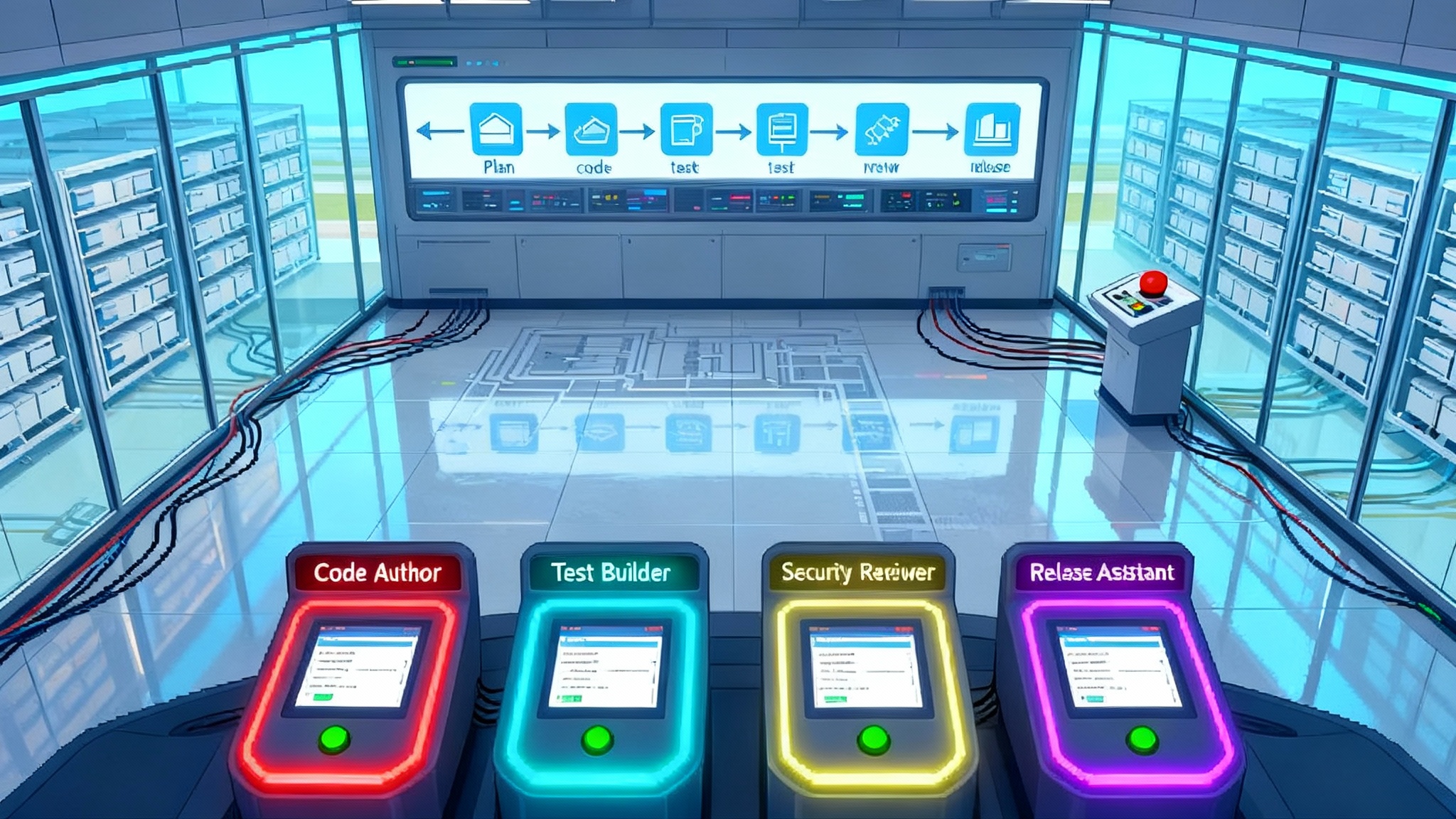
Agent Interop Is Here: A2A and MCP Ignite Cross-Stack Teams
October 2025 turned agent interoperability from promise to plan. Google’s Agent2Agent and Microsoft’s MCP support finally let cross-vendor agents talk, act, and audit across stacks. Here is what changes next.


Breaking: The agent era just got a common language
Two announcements have turned a long-standing promise into something you can plan around. On October 9, 2025, Google introduced Gemini Enterprise and formalized its Agent2Agent protocol, positioning it as the native way for agents to discover, message, and collaborate across vendors and apps. The launch put a stake in the ground for open interop and enterprise production use, not just demos or lab toys. Early coverage captured the scale and intent of the move in plain terms: an enterprise platform, new agent primitives, and a roadmap toward cross-system collaboration that customers can actually buy and deploy today. See the initial report: Gemini Enterprise AI platform for business. For context on Google’s direction inside Workspace, compare it with our take on Workspace as an agent OS.
Weeks later, Microsoft added fuel with first-class Model Context Protocol support inside Copilot Studio. MCP focuses on how agents safely connect to tools, knowledge, and actions. Where Agent2Agent standardizes agent-to-agent conversations, MCP standardizes agent-to-tool and agent-to-knowledge connections. Microsoft’s endorsement matters because it turns MCP from an interesting standard into a mainstream path for enterprise builders: Model Context Protocol in Copilot Studio.
Taken together, these moves supply the missing layer for cross-vendor multi-agent systems: a way to talk to each other and a way to act on the world without bespoke, brittle integrations.
Why protocols beat platforms at scale
Think of enterprise software as a shipping network. For decades, companies built bigger ships and faster ports, but global trade only exploded once the shipping container became a shared standard. That standard did three things: it created predictable interfaces, it made routes interchangeable, and it allowed entire industries to specialize without breaking the chain.
Agent2Agent is the container for agent-to-agent communication. It gives agents a common envelope to declare who they are, what they can do, what they want, and how they will handle privacy and governance. Model Context Protocol is the port equipment. It tells agents how to load and unload the right tools, knowledge, and actions with predictable shapes, authentication, and guardrails.
Without these layers, every agent crossing every boundary means one-off glue code, custom security exceptions, and fragile handoffs. With them, an agent from Google’s stack can delegate to a Copilot-built agent, which can call into a Salesforce Agentforce action, which can hand back a signed result that a Gemini agent can audit and reconcile. The agents do not need to share a runtime, a model family, or even the same cloud. They just need to speak the container language and use the port gear correctly.
The first result: mixed-model teams
Enterprises have been stuck in a false choice between stacking a single vendor’s agents everywhere or living with disconnected pockets. Protocols make the third path real: mixed-model teams.
- A procurement planner runs a Gemini agent that negotiates vendor terms and composes draft contracts. When it needs to cross-check spend policy or trigger purchase orders, it calls a Copilot Studio agent that exposes finance tools through MCP. The Copilot agent posts the approved purchase order and returns a signed confirmation.
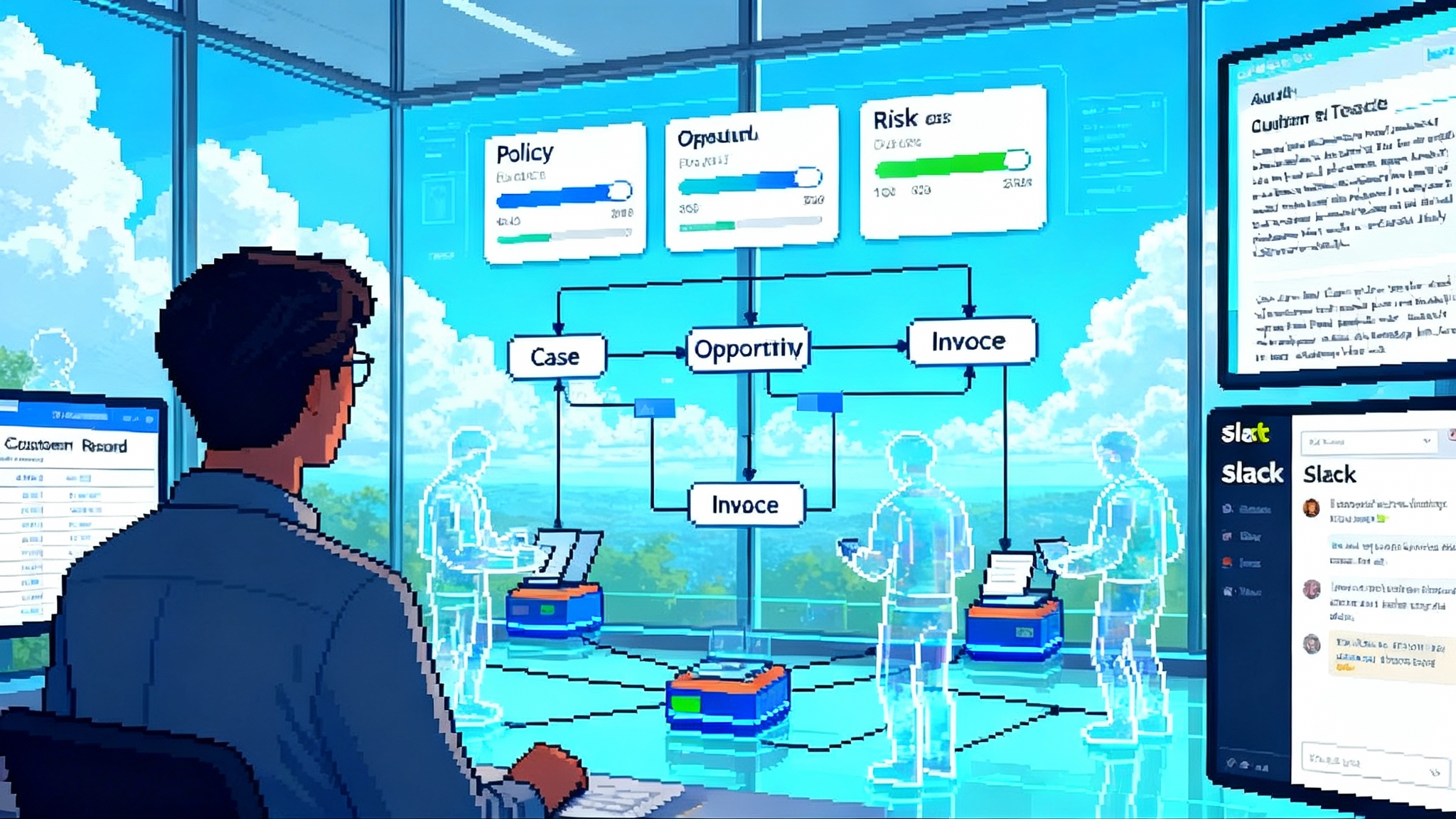
- A customer service supervisor embeds a Salesforce Agentforce agent that owns case resolution steps. When churn risk spikes, the Agentforce agent calls a Gemini research agent to summarize account history and product usage, then asks a Copilot agent to generate a credit memo through Dynamics, all under audit. For more on this pattern, see our Agentforce 360 playbook.
- A marketing team uses a creative agent tuned on multimodal assets. It delegates translation and brand compliance checks to a partner-built MCP server, then requests final approvals from an internal policy agent that documents the rationale for every change.
This is not a debate about which model is best in the abstract. It is specialization. Some agents reason better. Some agents act better. Some are wrapped in an enterprise platform with deep compliance features. Protocols let you combine them without re-platforming your stack.
The second result: a real agent marketplace
App stores were about distribution. An agent marketplace is about composition. In a protocol world, a marketplace is a registry of agent capabilities and a clearinghouse of trust signals, not just a list of downloads.
What changes with protocols:
- Discovery is structured. Agent descriptions, required scopes, supported actions, and cost models are machine-readable. An orchestration agent can select and chain agents on demand rather than human-heavy setup.
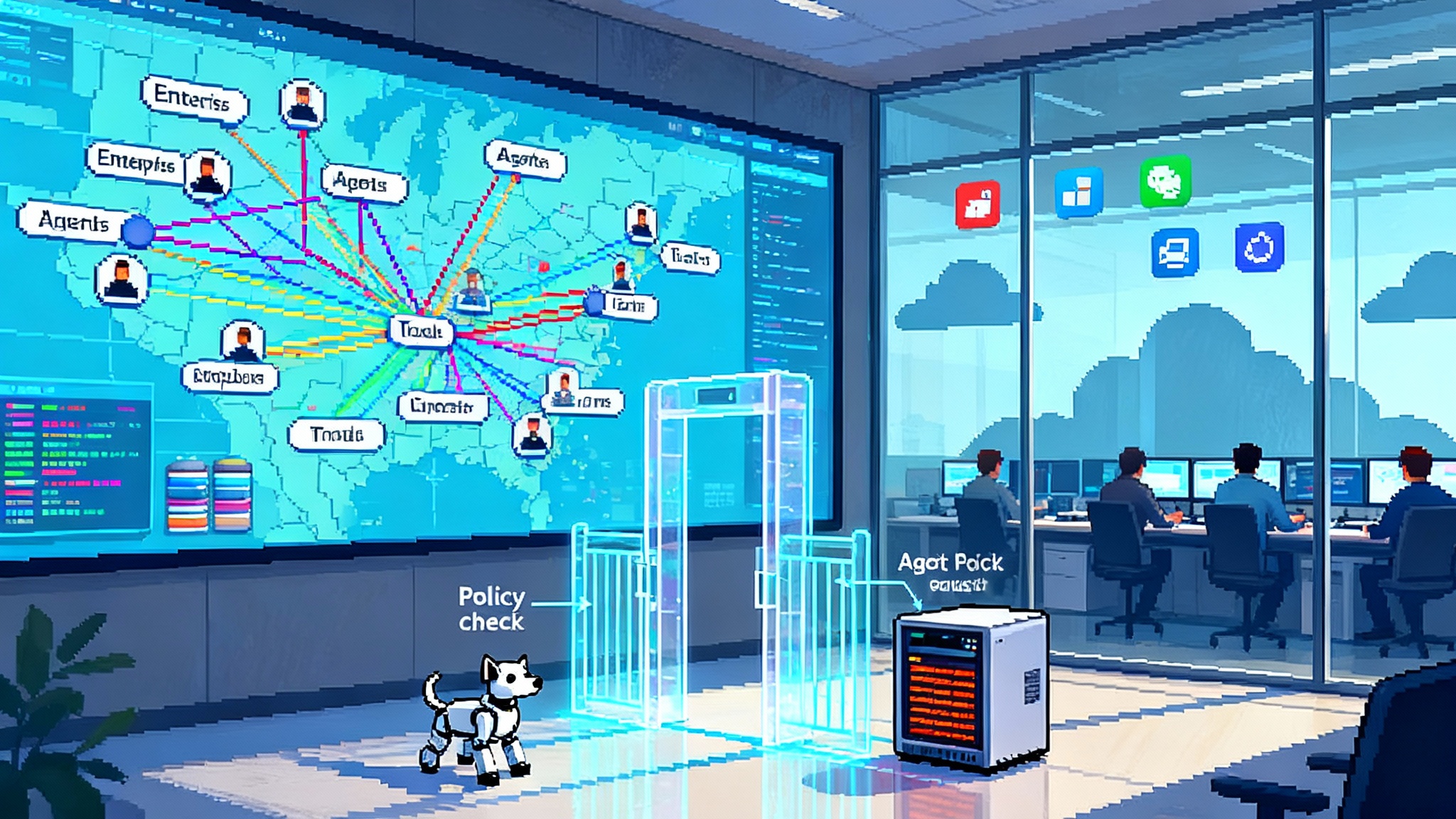
- Security scales. Agents describe data access needs and governance posture up front. Identity providers issue short-lived, purpose-bound tokens. Every call carries provenance and a verifiable execution record. For the control-plane side, revisit our Agent Security Stack guide.
- Pricing gets rational. Instead of per-seat license acrobatics, providers can offer per-action or per-outcome pricing with standard metering and signed receipts that finance can reconcile automatically.
- Procurement can approve in hours, not months. Standard agent manifests map to pre-negotiated policy templates. Red flags are automated. Legal reviews what is exceptional, not every detail for every agent.
Marketplace density follows the same power laws we saw with application programming interfaces and app stores, but the value delivered per integration is higher because the integration is reusable across ecosystems, not tied to a single platform’s plugin format.
The third result: architecture shifts from suites to protocol-driven workflows
In a world of protocol-ready agents, the suite is not the center. The workflow is. Enterprises will refactor around three new layers:
- Agent registry and routing
- An internal registry catalogs approved agents, their manifests, and their service-level objectives. Routing policies select which agent to use based on data residency, cost, or accuracy targets.
- Action fabric
- Tools and data are made available through MCP servers that wrap business systems. Versioned schemas define inputs and outputs. Changes are rolled out gradually with staged contracts.
- Governance spine
- Identity flows, policy enforcement, and auditing live outside any single agent. Every inter-agent message carries cryptographic provenance. Observability spans the entire workflow so you can answer: who asked whom to do what, with which data, and what happened next.
The net effect is a move from application-centric to protocol-centric thinking. You will still buy software suites, but you will integrate them through protocols that make switching costs smaller and innovation cycles faster.
The two protocols in plain language
- Agent2Agent is the conversation spec. It defines how agents identify themselves, advertise skills, request help, negotiate handoffs, and return signed results. It is concerned with trust, intent, and delegation across boundaries.
- Model Context Protocol is the tool spec. It defines how an agent discovers tools, fetches knowledge, authenticates, and calls actions. It is concerned with predictable interfaces and safe execution.
Used together, they give you a complete path: talk to the right specialist, then use the right tool.
What changes for builders starting now
If you build internal tools or products, the game has changed. Interop is no longer a nice-to-have. It is the shortest path to utility and the best defense against lock-in. Here is a 6 to 12 month playbook to become protocol-ready.
Month 0 to 2: Pick one critical workflow and stand up the basics
- Choose a workflow with measurable value and low regulatory complexity. Think vendor onboarding, invoice reconciliation, renewals chasing, or returns processing.
- Wrap one core system in an MCP server. Expose 5 to 10 high-impact actions with strict schemas. Start with read actions, then add write actions once monitoring is in place.
- Instrument everything. Emit structured logs for every agent message and tool call, including caller identity, input hash, output hash, and policy decisions.
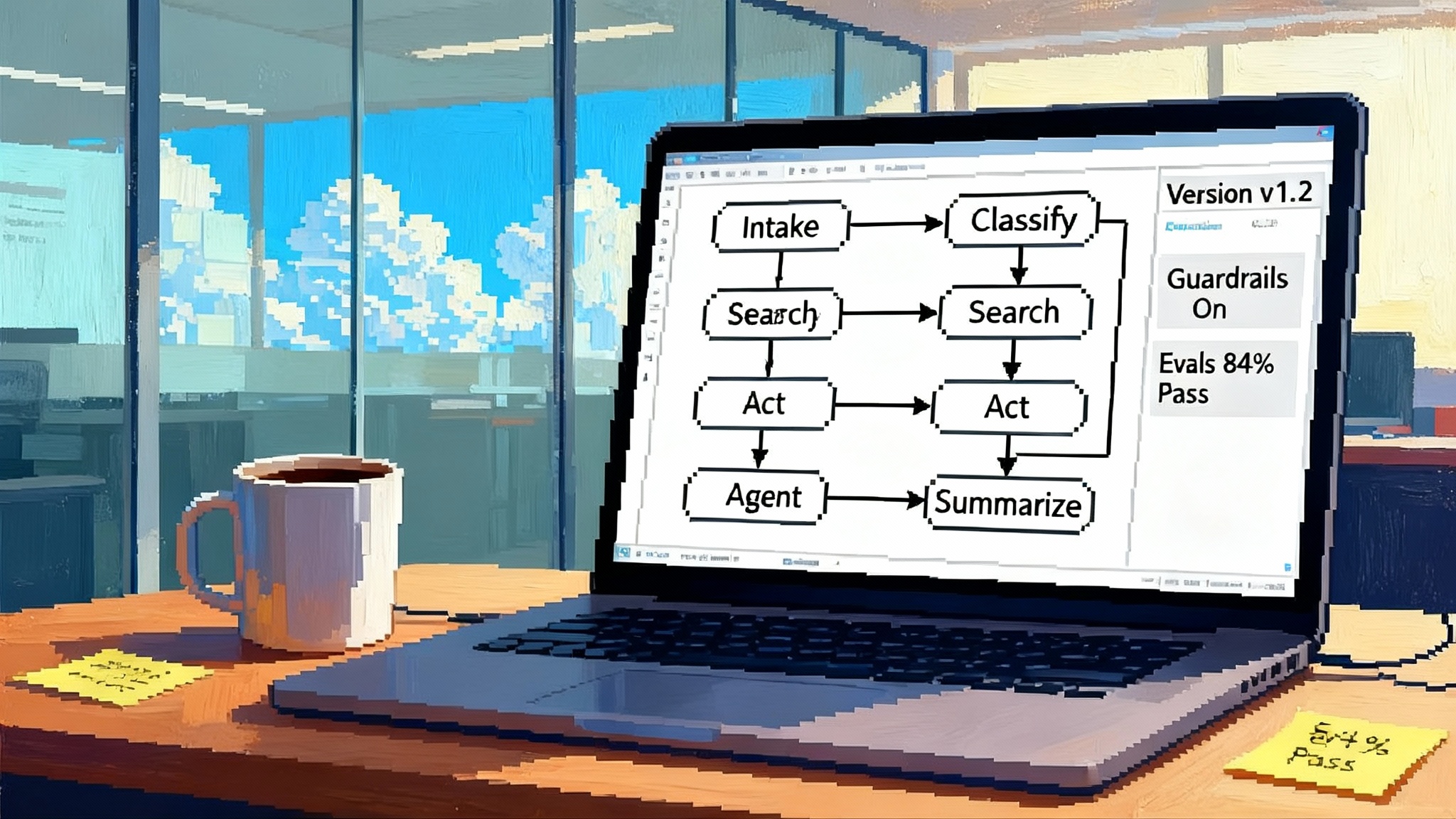
- Stand up an internal agent registry. Record agent manifests, scopes, and contacts. Build a thin routing layer that selects agents based on policy rules.
Month 3 to 4: Add your first mixed-model chain
- Add a Gemini agent for research and summarization if your data sits on Google Cloud or Workspace. Pair it with a Copilot Studio agent for operations that live in Microsoft systems. Use Agentforce to orchestrate customer or case actions if Salesforce is your system of record.
- Define agent-to-agent interfaces with clear intent types, expected outcomes, and timeouts. Keep contracts small and versioned.
- Start end-to-end evaluation. For every run, calculate task success, cycle time, cost per outcome, and error categories. Compare agent-only, human-only, and mixed modes.
Month 5 to 6: Introduce governance patterns and failure budgets
- Move identity and authorization to a central service. Issue short-lived credentials with explicit scopes per exchange. Rotate secrets automatically.
- Add policy-as-code that evaluates every inter-agent message. Block high-risk operations unless preconditions are met. Log every decision with reasons.
- Set a monthly failure budget. Decide in advance how many retries, rollbacks, and manual escalations are acceptable. Alert on trend shifts, not just absolute failures.
Month 7 to 9: Prepare for marketplace agents
- Build a vetting checklist for external agents: manifest completeness, data residency, memory handling, rate limiting, cost ceilings, and redaction behavior.
- Establish a tiered approval process. Low-risk agents get auto-approval with guardrails. High-risk agents require security and legal review with a deadline.
- Define commercial patterns. Prefer per-action pricing with signed receipts. Cap spend per run and per month. Require providers to publish reliability and latency service levels.
Month 10 to 12: Scale and standardize
- Expand your MCP layer to cover more systems. Aim for 80 percent of high-frequency operations exposed as typed actions.
- Create reusable agent roles. For example, Request Triage, Policy Enforcer, Cost Optimizer, and Auditor. These roles plug into many workflows and keep logic consistent.
- Run a brownout test. Temporarily disable one vendor’s agent and confirm that routing falls back to an alternative provider without breaking the workflow. Document the cost and quality delta so procurement has leverage.
Concrete risks and how to handle them
-
Version drift
- Risk: An agent updates its schema and breaks chains.
- Action: Pin versions in manifests. Add contract tests to your CI. Roll forward with staged canaries and automatic rollback.
-
Hidden model memory
- Risk: A model carries facts from one customer to another inside long-lived sessions.
- Action: Use short session windows and explicit memory stores with retention policies. Verify that no implicit memory is required for correctness.
-
Cost runaways
- Risk: Agents call each other in loops.
- Action: Enforce hop limits and per-run cost ceilings. Require agents to include the reason for delegation in every call.
-
Accountability gaps
- Risk: No one can explain why an action was taken.
- Action: Require signed summaries on completion that include the chain of custody, inputs, tools invoked, and policy checks passed. Store these alongside the final record.
What to watch over the next 6 months
-
Native observability in agent platforms
- Expect deeper traces that follow an interop chain across vendors. The winning vendors will expose open telemetry you can ship to your own stack.
-
Reference registries
- Expect curated registries of certified agents with standard manifests and reliability stats. Security teams will treat them like allowlists.
-
Contracts for outcomes, not tokens
- Expect more providers to quote per-ticket resolution or per-qualified lead. Protocols make it enforceable because the handoffs are standardized and auditable.
The larger implication
For 20 years, enterprise architecture was dominated by suite gravity. You bought the office suite, the customer suite, the finance suite, and then begged them to behave. The rise of open protocols for agents flips the center of gravity. Workflows become the product. Vendors win by being excellent citizens of the protocol world, not by locking workflows inside their walls.
That is why October 2025 matters so much. With Gemini Enterprise and Agent2Agent from Google on one side and Microsoft bringing Model Context Protocol into Copilot Studio on the other, we finally have compatible containers and ports for the agent economy. The change will not be loud. It will be quiet and compounding, like a new standard always is. One workflow gains a specialist here. One marketplace listing becomes the default there. Then, suddenly, your most important business process is no longer owned by a single vendor. It is owned by your protocols and your policies.
The next step is simple. Pick one workflow. Wrap one system. Chain one outside agent. Measure it. If the chain holds, add another. If it does not, fix the contract, not the vision. In a year, you will not be debating whether agents can interoperate. You will be debating which mix of agents gives you the best outcome at the best price. That is a better argument to have.
Conclusion
Cross-vendor multi-agent systems were a slogan until October 2025 gave them a syntax and a socket. Agent2Agent supplies the syntax for agent conversations. Model Context Protocol supplies the socket for tools and knowledge. Mixed-model teams become normal. Marketplaces become composable. Architecture becomes protocol-first. The enterprises that move now will not just adopt agents. They will assemble work from interchangeable specialists and treat agility as a system property, not a hero project. That is the real breakthrough.